How We Built an Autonomous Lead Generation Pipeline with AI
A technical deep-dive into the 5-phase orchestration engine we deployed for a B2B marketplace — combining headless browser automation, multi-API data enrichment, and Claude NLP intent classification to eliminate manual prospecting entirely.


- Manual B2B outbound prospecting costs $6,000+/month per SDR in salary and tooling, yet only 2-5% of cold emails generate meaningful replies.
- We replaced the entire manual pipeline with a 5-phase autonomous system costing ~$800/month in API and compute overhead.
- By cascading enrichment requests across 4 different data providers (Hunter.io, Apollo.io, Clearbit, Google Maps), we achieved an 85%+ contact match rate — roughly 3x better than any single provider alone.
- Claude AI's NLP engine classifies inbound reply intent with sufficient accuracy to eliminate all manual inbox monitoring, routing only qualified "Hot Leads" to the human sales team.
Enterprise Case Study: Looking for the full client business metrics and executive summary? See our production deployment case study: Autonomous B2B Lead Generation Pipeline Case Study →
The Problem: Manual Prospecting Doesn't Scale
B2B lead generation has always been labor-intensive. The conventional model relies on Sales Development Representatives (SDRs) performing four distinct tasks: identifying target companies, finding decision-maker contact details, crafting personalized outreach, and triaging inbound replies. Each step is manual, error-prone, and expensive.
Our client — a B2B analytics platform; was spending over $18,000/month on a 3-person SDR team. Their pipeline was generating leads, but the unit economics were unsustainable: roughly $75 per qualified conversation. They needed to scale outbound volume by 4x without proportionally scaling headcount.
The Architecture: 5 Phases of Autonomous Orchestration
Rather than optimizing the existing manual process, we redesigned it from first principles. The result is a closed-loop system where every phase operates autonomously, with human involvement only at the point of qualified conversation.
Phase 1: Resilient Data Extraction
The first challenge was acquiring target company data at scale. Industry directories and competitor platforms employ sophisticated bot detection, CAPTCHAs, browser fingerprinting, rate limiting, and JavaScript challenges.
We deployed headless Chromium instances via Apify Cloud, orchestrated through Playwright. The critical design decision was implementing a rotating residential proxy pool that distributes requests across thousands of IP addresses, making automated access indistinguishable from organic browsing. Each scraping session automatically handles:
- CAPTCHA bypass through proxy rotation and request throttling
- Automated deduplication at the data ingestion boundary
- Schema normalization to create consistent records regardless of source format
// Playwright stealth profile configuration
const browser = await chromium.launch({
args: [
'--disable-blink-features=AutomationControlled',
'--disable-features=IsolateOrigins,site-per-process'
],
proxy: { server: process.env.ROTATING_RESIDENTIAL_PROXY }
});
const context = await browser.newContext({
userAgent: 'Mozilla/5.0 (Macintosh; Intel Mac OS X 10_15_7) AppleWebKit/537.36'
});Phase 2: Waterfall Data Enrichment
Raw scraped data is inherently incomplete. A typical listing might include a company name and address, but no email, phone number, or decision-maker name. The conventional approach is to use a single enrichment provider (e.g., Apollo.io) and accept its coverage gaps.
We engineered an intelligent waterfall routing system in n8n that cascades each incomplete record through multiple providers in order of cost-effectiveness:
- Hunter.io, Domain-based email lookup (cheapest per query, ~85% coverage for established domains)
- Apollo.io; Full contact enrichment including title, phone, and LinkedIn (higher cost, ~70% incremental fill rate for records Hunter missed)
- Clearbit, Company-level enrichment: employee count, revenue range, tech stack (useful for qualification scoring)
- Google Maps API; Final fallback for local businesses: phone numbers, addresses, operating hours
The waterfall logic is deterministic: if Hunter.io returns a verified email, the record skips Apollo. If Apollo fills remaining fields, Clearbit is skipped. This minimizes API spend while maximizing data completeness. The result: 85%+ contact fill rates compared to ~35% with any single provider.
Phase 3: Dynamic Outreach Engine
With enriched, validated contact records, the system triggers personalized email sequences via SendGrid on dedicated IP addresses. The outreach engine handles:
- Dynamic variable injection: Company name, industry, decision-maker name, and relevant pain points pulled from enrichment data
- Conditional logic sequences: Follow-up timing and messaging adapt based on whether the recipient opened previous emails
- Automated suppression: Bounce handling, unsubscribe processing, and duplicate prevention are handled programmatically, not by a human checking a spreadsheet
Using dedicated IPs (rather than shared SendGrid pools) is critical for deliverability at scale. We warm each IP gradually over 2-3 weeks before increasing volume, maintaining sender reputation scores above 95.
Phase 4: AI Intent Classification
This is where the system becomes genuinely autonomous. Traditional outbound operations require a human to read every reply and categorize it: is this person interested? Are they asking a question? Do they want to be removed?
We replaced this entirely with Claude AI as an NLP intent classifier. The system polls reply inboxes hourly and passes each message through a structured prompt that outputs a JSON classification:
// Claude 3.5 Sonnet Structured Triage System Prompt
System: You are an enterprise B2B sales development triage agent.
Analyze the incoming prospect email response and classify intent:
{
"intent": "hot_lead" | "question" | "opt_out" | "out_of_office" | "irrelevant",
"confidence": 0.95,
"suggested_action": "route_to_sales" | "auto_respond" | "suppress"
}Each classification triggers a downstream action automatically:
- Hot Lead: Record flagged in CRM, Slack notification sent to sales team with full context
- Question: Auto-responder sends a templated answer with relevant case study links
- Opt-Out: Contact immediately added to suppression list, confirmation sent
The sales team only ever interacts with prospects who have demonstrated genuine buying intent. Everything else is handled autonomously.
Phase 5: Observability & Monitoring
An autonomous system is only as good as its monitoring. We built a comprehensive observability layer that tracks:
- Scraping health: Success rates, blocked requests, and zero-result anomalies trigger Slack alerts within 5 minutes
- API rate limits: Each enrichment provider has different rate limits and credit pools; the system tracks consumption and automatically throttles before hitting caps
- Email deliverability: Bounce rates, spam complaints, and open rates monitored in real-time with automated IP warming adjustments
- Pipeline throughput: End-to-end processing time from scrape to outreach, with bottleneck identification
Results: The Numbers
After 90 days of production operation:
- 4x increase in qualified pipeline volume compared to the 3-person SDR team
- 85%+ contact enrichment rate via the multi-provider waterfall (vs. ~35% with single-provider lookup)
- Zero human hours spent on inbox monitoring, Claude handles 100% of initial reply triage
- ~$800/month in total operational cost (API credits + compute), down from $18,000/month in SDR salaries
When This Approach Works (and When It Doesn't)
This architecture is not universally applicable. It works best when:
- Your target market is large enough to justify automation (1,000+ potential targets minimum)
- Target companies have digital footprints; websites, social profiles, or directory listings that can be scraped
- Your sales cycle benefits from high-volume, personalized outreach rather than highly strategic, account-based approaches
- Legal compliance is manageable, GDPR and CAN-SPAM requirements are built into the suppression logic
For account-based selling with fewer than 100 target accounts, manual research and personalized outreach will typically outperform automated systems. The economics only favor automation at scale.
Build vs. Buy
Platforms like Apollo.io, Outreach, and Salesloft offer partial automation. The difference with a custom-built pipeline is control and cost:
- No per-seat licensing: SaaS outbound tools charge $100-200/user/month. A custom pipeline has fixed infrastructure costs regardless of team size.
- Custom enrichment logic: Off-the-shelf tools use a single data provider. The waterfall approach yields significantly higher match rates.
- AI flexibility: Claude's classification can be tuned to your specific industry language and qualification criteria; something no generic tool offers.
The tradeoff is upfront engineering investment (~4 weeks) versus ongoing SaaS subscriptions. For organizations processing 1,000+ leads/month, the custom approach typically breaks even within 60 days.
Want to explore whether an autonomous pipeline makes sense for your sales operation? Explore our Marketing AI Automation blueprint or book a free architecture call below, we'll map your current process and identify automation opportunities.
See the full interactive case study →
Technical Documentation & Voice AI Qualification
Core workflow orchestration and database storage patterns in this build follow the official n8n Workflow Orchestration docs and Supabase Postgres documentation. To see how outbound lead discovery pairs with sub-60-second automated phone qualification, read our Outbound AI Voice Agent for Lead Qualification Case Study or inspect our AI Lead Finder Chatbot Case Study.
Frequently Asked Questions
How does AI-powered lead generation work?
AI-powered lead generation uses headless browser automation (via tools like Apify/Playwright) to discover prospects, multi-API enrichment waterfalls (Clearbit, Apollo, Hunter.io) to fill in contact details, and AI models (Claude, GPT) to classify intent and prioritize outreach. The entire pipeline runs autonomously with human-in-the-loop approval for final outreach.
Is automated lead generation legal and ethical?
Yes, when done correctly. Key compliance requirements include CAN-SPAM compliance (clear unsubscribe, physical address), GDPR consent tracking for EU contacts, respecting robots.txt, and rate-limiting scraping requests. All outreach should include opt-out mechanisms and comply with platform terms of service.
How much does an AI lead generation pipeline cost to build?
A basic AI lead generation pipeline costs $2,500-$8,000 to build and $200-$500/month to operate (API costs for enrichment, email sending, and AI inference). At scale, the cost per qualified lead drops to $0.50-$2.00 compared to $50-$150 for manual prospecting.
Related Alfa Analytics Services
Written by Ali Raza
Follow on LinkedInCo-Founder & CEO at Alfa Analytics
Co-Founder & CEO at Alfa Analytics. Leads BI architecture, Power BI and Tableau governance, and executive analytics roadmaps across healthcare, e-commerce, legal, and SaaS teams.
Want to apply this to your data stack?
Book a free 30-minute technical call during US East Coast business hours (8:00 AM – 4:30 PM EST) to review your architecture.
More from Alfa Analytics

How AI is Transforming Business Intelligence in 2026
78% of organizations now use AI in at least one business function, and Gartner predicts 40% of analytics queries will be natural language by 2026. This guide separates genuine AI impact from vendor hype — covering what's working, what's overpromised, and a practical implementation framework.
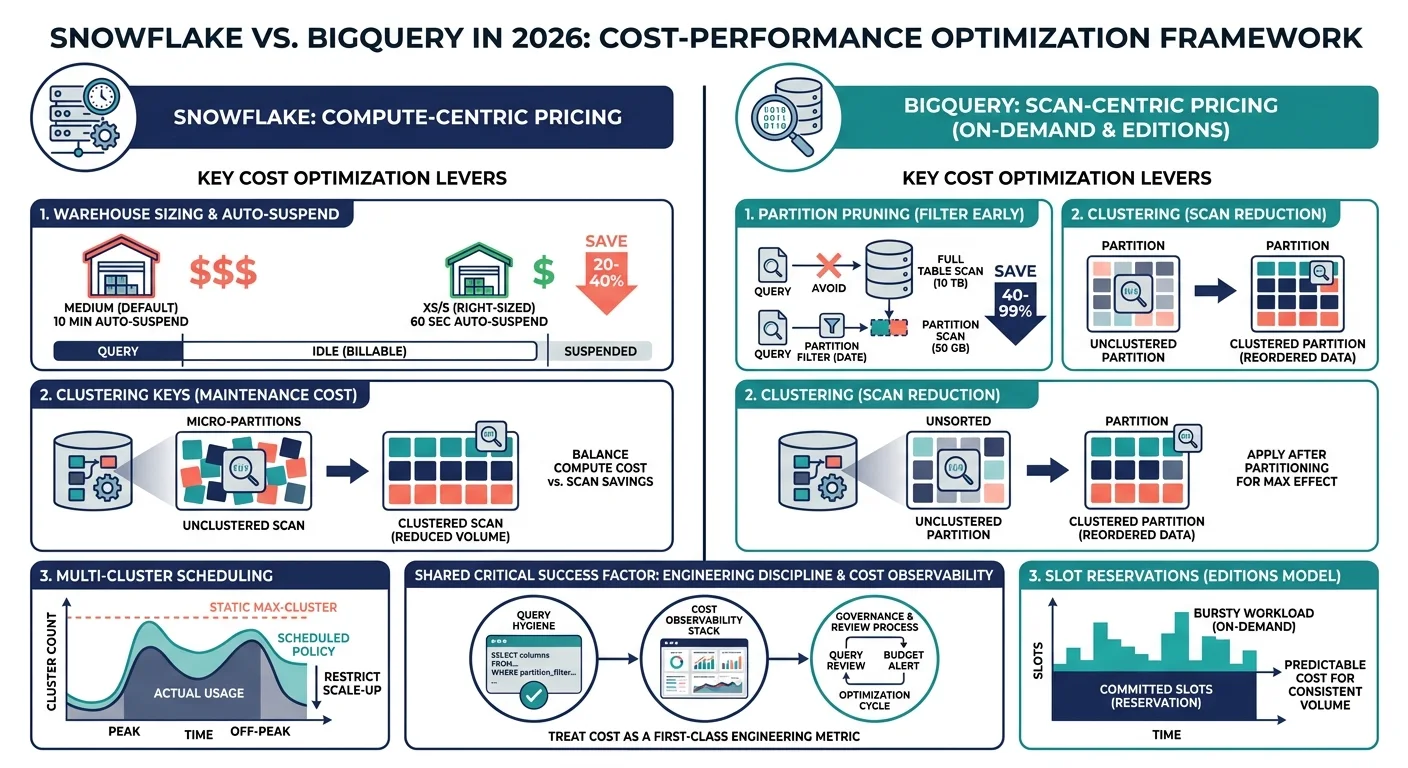
Snowflake vs. BigQuery in 2026: A CTO's Guide to Cost-Performance Optimization
Snowflake and BigQuery are both capable at scale, but capability is not the differentiator in 2026. Cost governance is. This post breaks down the compute and storage economics of both platforms and gives CTOs the specific clustering, partitioning, and SQL optimization techniques that actually move the needle on warehouse spend.
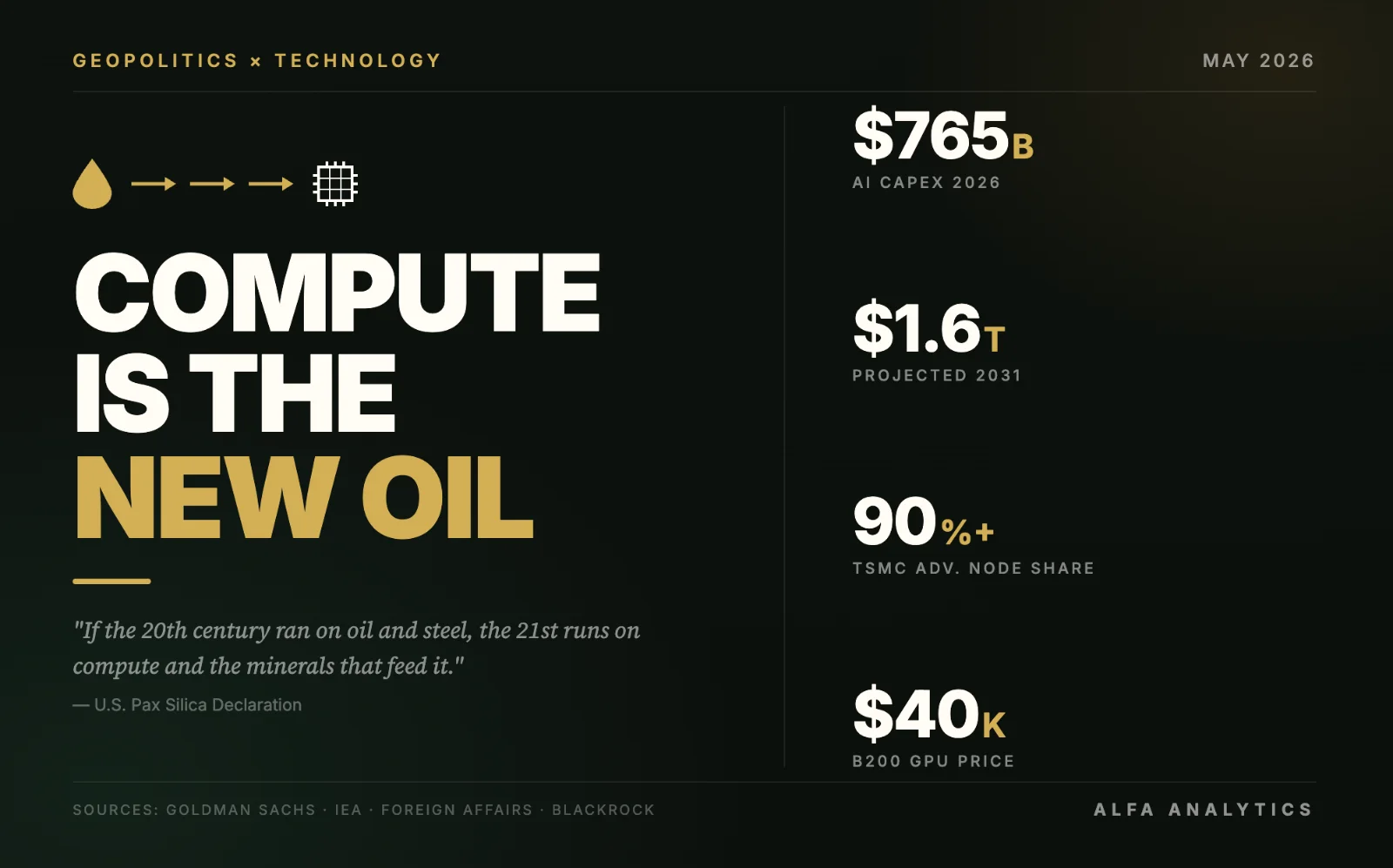
Compute Is the New Oil: Here Is the Proof
The four largest hyperscalers are projected to spend $765 billion on AI infrastructure in 2026, and BlackRock is already calling compute the next crude oil futures market. This post breaks down the economic, geopolitical, and strategic proof that compute has crossed from utility to critical resource, and what that means for how you plan your technology investments.